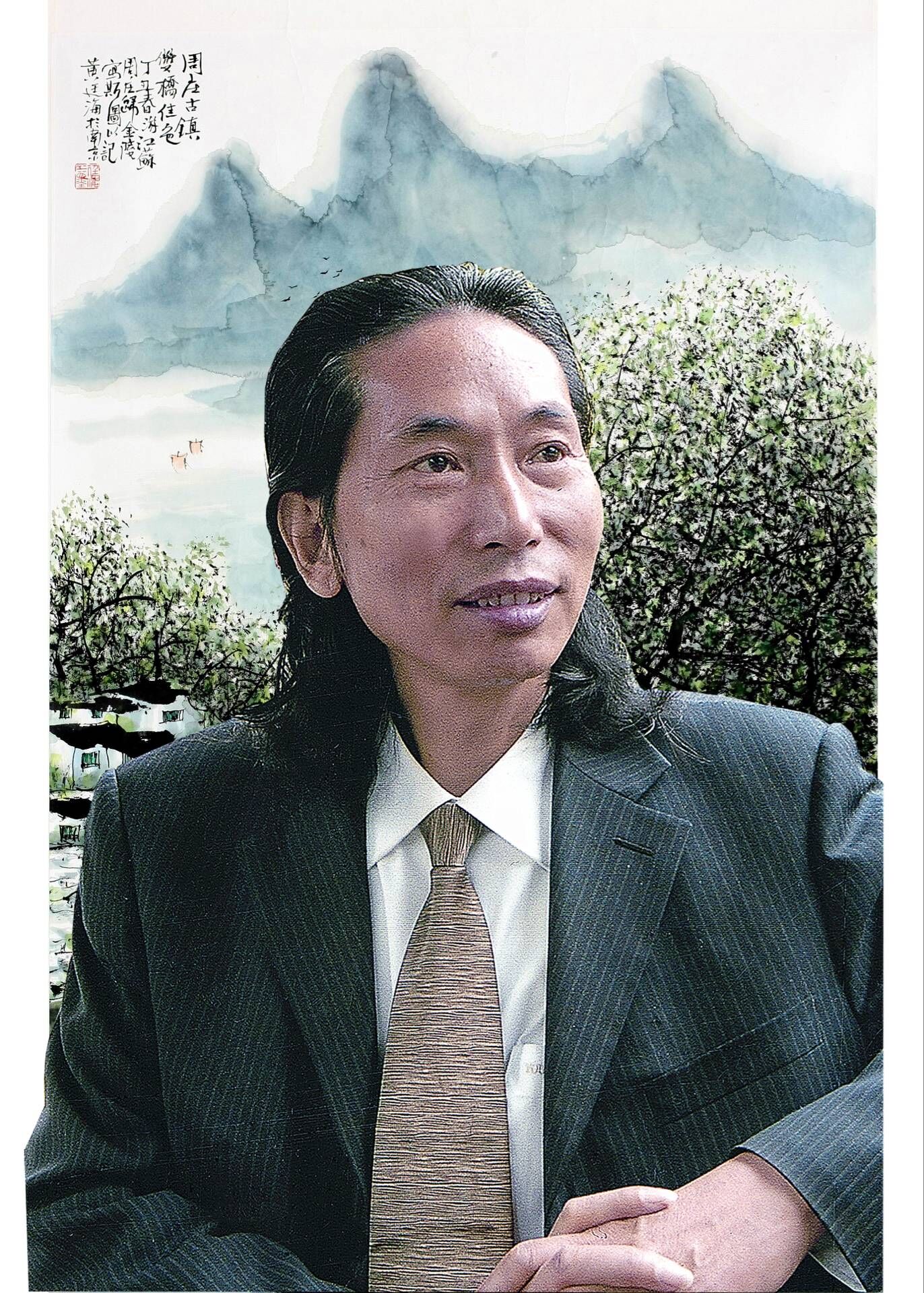
To open up a new
world of landscape painting in Nanpai
开拓南派山水画新天地
An Analysis of Huang Tinghai's Xinnan
School Landscape Paintings and Their Aesthetic Features---- Zuo Zhuangwei
Chinese landscape paintings began in the Wei and Jin
dynasties, and were formed in the Tang and Tang dynasties. Because of the
different natural environments of the painters during the period of the Five
Dynasties, the maps made were divided into two schools of the South and the
North. The North School is represented by Liang Ren Jing Hao. He lives in
Taihang Mountain for a long time. He is good at painting the lofty mountains,
cliffs, and cliffs of the northern region. He has majestic majestic and
masculine masculinity; South China Tang Dongyuan is the guru of the Tang
Dynasty. The good landscapes are haunted by mountains and rivers, Yunxia is
famous, Xiqiao, Pupu, and Zhouzhou are hidden, and the plain and innocent south
of the Yangtze River, attracting more and more landscapes. The clear separation
between the North and South schools divided the development of Chinese
landscape painting. Since the Southern Song Dynasty, the Chinese Cultural
Center moved south to the south of the Yangtze River, and the painters were
relatively concentrated in the south. Therefore, the Southern School of
Landscape Painting flourished. Since the 20th century, painters from Jiangsu
region have gathered, especially Jinling as the center, forming a powerful
Jinling school of painting. The style of the painter is still the southern
school landscape created by Dong Yuan. Today's landscape artists, such as Lin,
are paintings like the sea, but their styles and appearances are similar to
each other. This is caused not only by the physical and geographical
environment in which they are located, but also by the fact that there are
layers of teachers and bearers. Every painter with ideology and knowledge is
always trying hard to move beyond the limitations of the paintings created by
the region and create new styles of painting. He hopes to show the woods and
forests in Lin Hai of the landscape paintings and excels. Jin Tinghai's
landscape painter Huang Tinghai has been standing proud and demonstrating
himself.
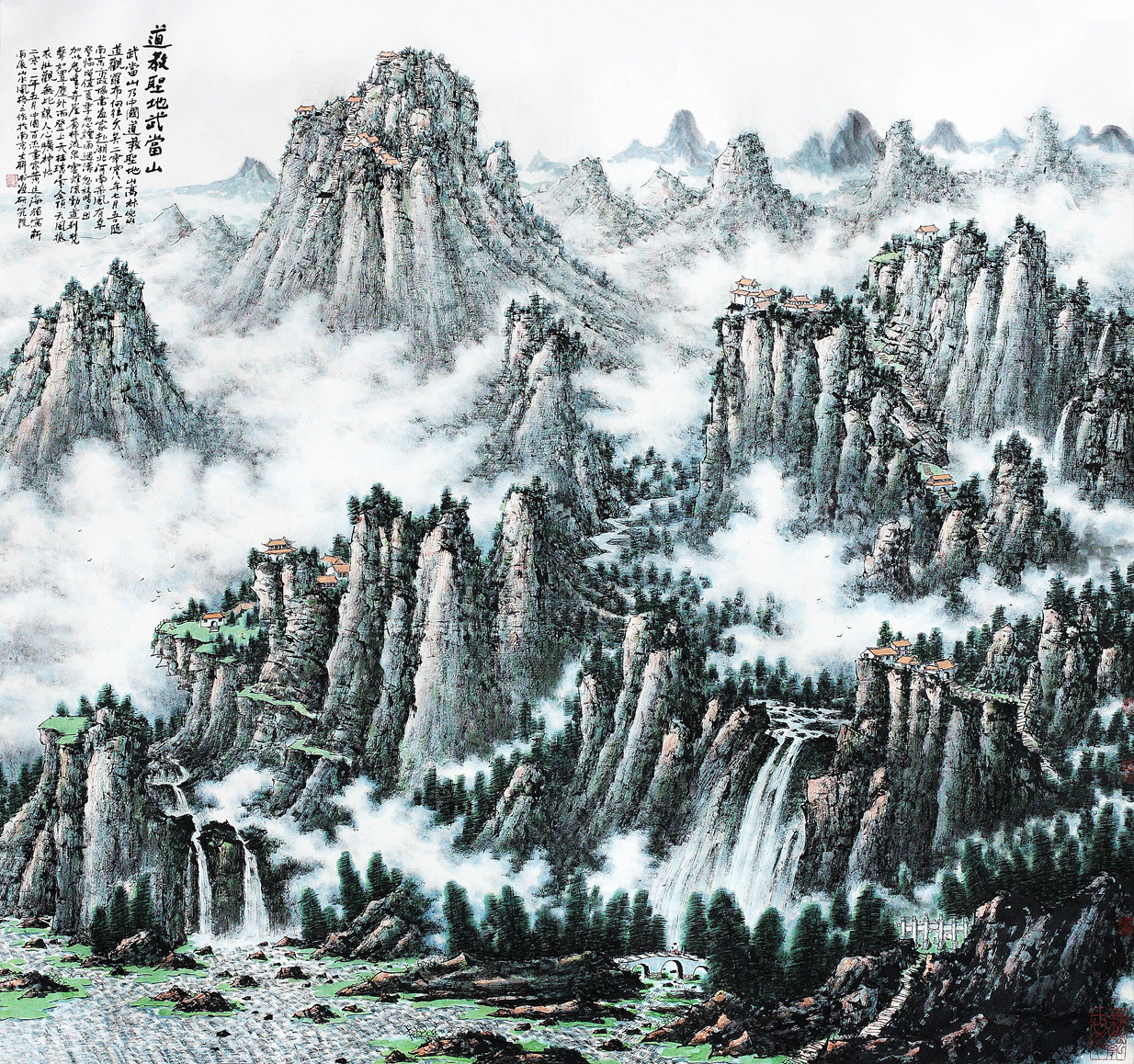
Artists characterized by regional natural appearance
as artistic style are influenced by the limitations of the natural landscape in
the destination. This regional natural appearance influences the painter's
expression theme orientation and aesthetic concepts. Once the artist with
ideological and creative ambitions comes out of the geographical limitations , Yunyou
Quartet, exposure to the geographical landscape of different regions, different
artistic image created by different aesthetic orientation, will naturally
absorb and integrate into their own artistic creation, thus creating a new
artistic style rich in their own personality. In Jinling painting, Huang
Tinghai is such an artist. He is not constrained by Jinling School’s
traditional art concepts and painting methods. He uses his unique aesthetic
perspective to view the landscape features of the Jiangnan River and the
landscape style of the north. He ingenuity integrates the beauty of the
feminine and the masculine into one, creating a landscape that is both north
and south. Quality characteristics Xinnan School landscape painting. His
neo-sense landscape paintings and the Jinling School's traditional style opened
the image distance, just as the capital artist Liu Boshu said “Jinling
Landscape is another” and commented by Song Wenzhi, the landscape artist,
“uniquely craftsman writes Yunshan”.
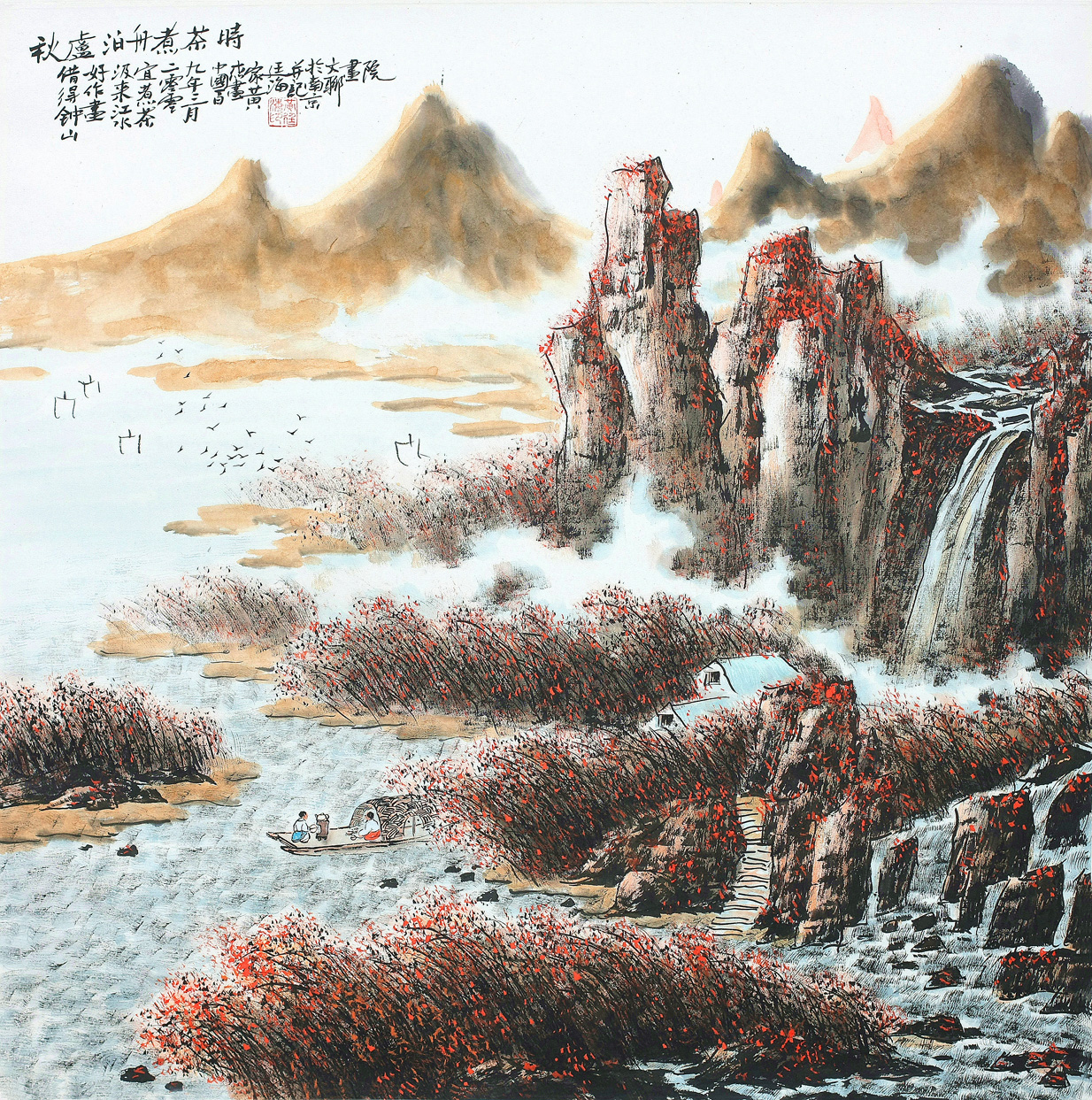
"Home" is also a self-reliance portal. Huang
Tinghai's landscape portal is known to be independent. He was a teacher of the
Southern School, and he also exceeded the inherent vistas and paintings of the
Vietnamese faction. He stood at the top of the south and the north, standing on
the top of the mountains and rivers of the motherland, rearranging the scenery
from the aesthetic height. In fact, in today's world, humans have already
rearranged mountains and rivers. In the mountains of the north, there is a
landscape of Jiangnan Water Town, and in the south of the Yangtze River, there
are many majestic and majestic mountains. As long as the artist walks into the
mountains and rivers in the world, he is full of mountains and rivers, masters
make great achievements, and creates his own scenery. The appearance of the
landscape must be different from his home. In the landscape paintings of the
Tinghai, the general trend of northern landscapes is taken. The peaks of the
mountains cascade and the odd cliffs rise. The mountain-shaped mountains take
more pyramidal vertebrae. They have a tendency to rise to prosperity. They are
clever and handsome, yet they are stable and unshakable. The visual experience,
such as "Yun Chung Castle Peak", "I love Mount Yoshigao", "Yunshan
Shenyou Earthly" and so on. This kind of home setting is itself a real
landscape from reality. After all, life is not equal to art. Landscape is the
artist's creation of aesthetic ideals and social ideals. It is a different kind
of reality from the real world. Spiritual material world - the art world. In
this world, people pray for spiritual pleasure and aesthetic enjoyment.
Therefore, in the creative process, Tinghai can imaginatively create and create
scenery. He arranged bridges in the mountains of the Qifeng Peak and the jungle
waterfalls, accompanied by lotus ponds, ducks, and fishermen's boats; he was
able to open a pure land cottage in the inaccessible cliffs, clouds, and create
a party. Meaningless dissolved dissolved environment. From the perspective of
the scenes of the scene, we can see both strong and powerful masculine beauty
in the north and the beautiful and graceful beauty of the South in the south.
These paintings have a painting in the south and the north, and are more from
the artist’s social ideals and aesthetics. Created at the ideal level, he
attempts to create a perfect picture of the world, but at the same time shows
the ideal of romanticism that transcends reality. Many of his landscape
paintings are aimed at “Going out of the world” in Yunshan Mountain, “I’m alone
in the world,” and “Clouds are good for heaven and earth” and so on. The
artistic conception presented by the scenes of the entire picture is fantastic,
super dusty, and has a strong visual impact and mental appeal. People enjoy the
spiritual pleasure and aesthetic pleasure that are hard to come by in the real
world. Modern people are in an environment of fierce survival and development
and competition. The fatigued body and mind can get surreal comfort from his
paintings, temporarily forgetting all the troubles of the world. In this
connection, the landscapes described by him not only have a place to live. You
can swim and watch, and you can balance your mind and purify your mind.
Therefore, the landscape paintings of the Tinghai inherited and developed the
spirit of traditional art and infused modern consciousness with high
philosophical connotations and modern psychological and aesthetic significance.
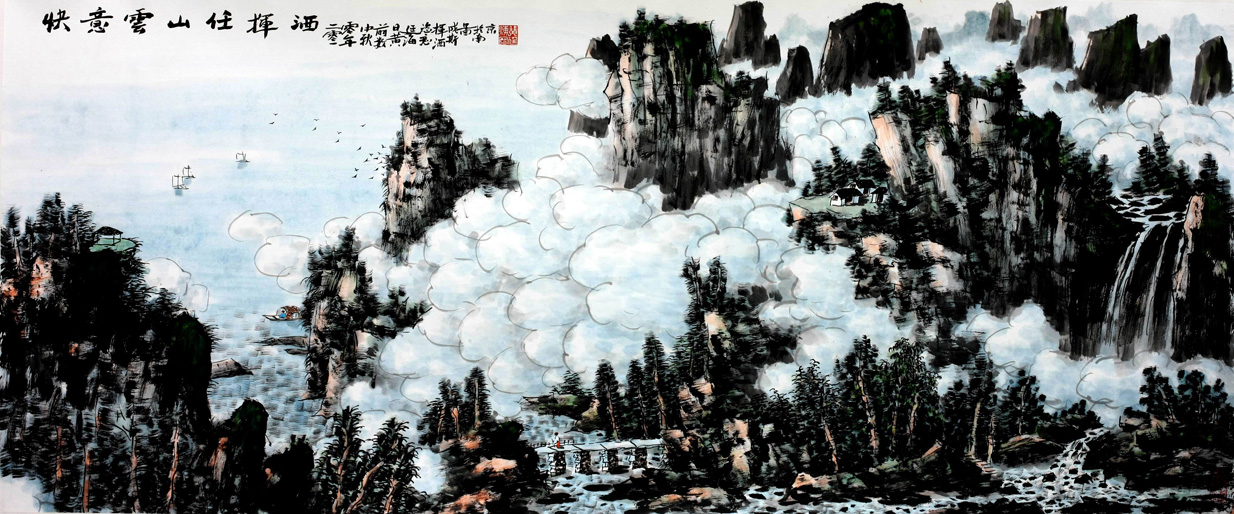
Chinese landscape painting experienced the creation
and development of the artist, and it has reached a high level of
generalization in the art language. It has formed a normative formula and has a
variety of model theories. Later scholars have two attitudes toward this, one
is to abide by Chen Fa. It is not allowed to exceed the threshold of Leichi,
and is based on the established method of the ancients. The people of this
generation can draw a perfect example of the highest degree of religion.
However, there is no touching feeling, no interest in life, no atmosphere of
the times. The second is to know the principle of law and not to obey Chen. In
the face of a new era, I created my own method. The heart of the ancients does
not emphasize the trace of a retro person. However, it is the essence of nature
and the heart of the painter. Tinghai is a painter with profound theoretical
cultivation and good thinking. He has published works on Fine Arts Landscape
Paintings, Southern Landscape Painting School, and Huang Ting-Hai Painting
Collection and published many papers. Therefore, he stands in a Theorists are
highly regarded to examine the merits of Chinese and foreign artists, learn
from them, learn from them, and seek breakthroughs. In the process of creating
landscape paintings, he always runs through a kind of creative consciousness.
He dares to break through stereotypes and boldly create new laws, so that he
has his own set of unique ideas in terms of subject matter, composition, ink,
color, light and shadow, creation of environment and aesthetics. In order to
build its own distinctive image art style and style characteristics, it is
unique in today's art circles.
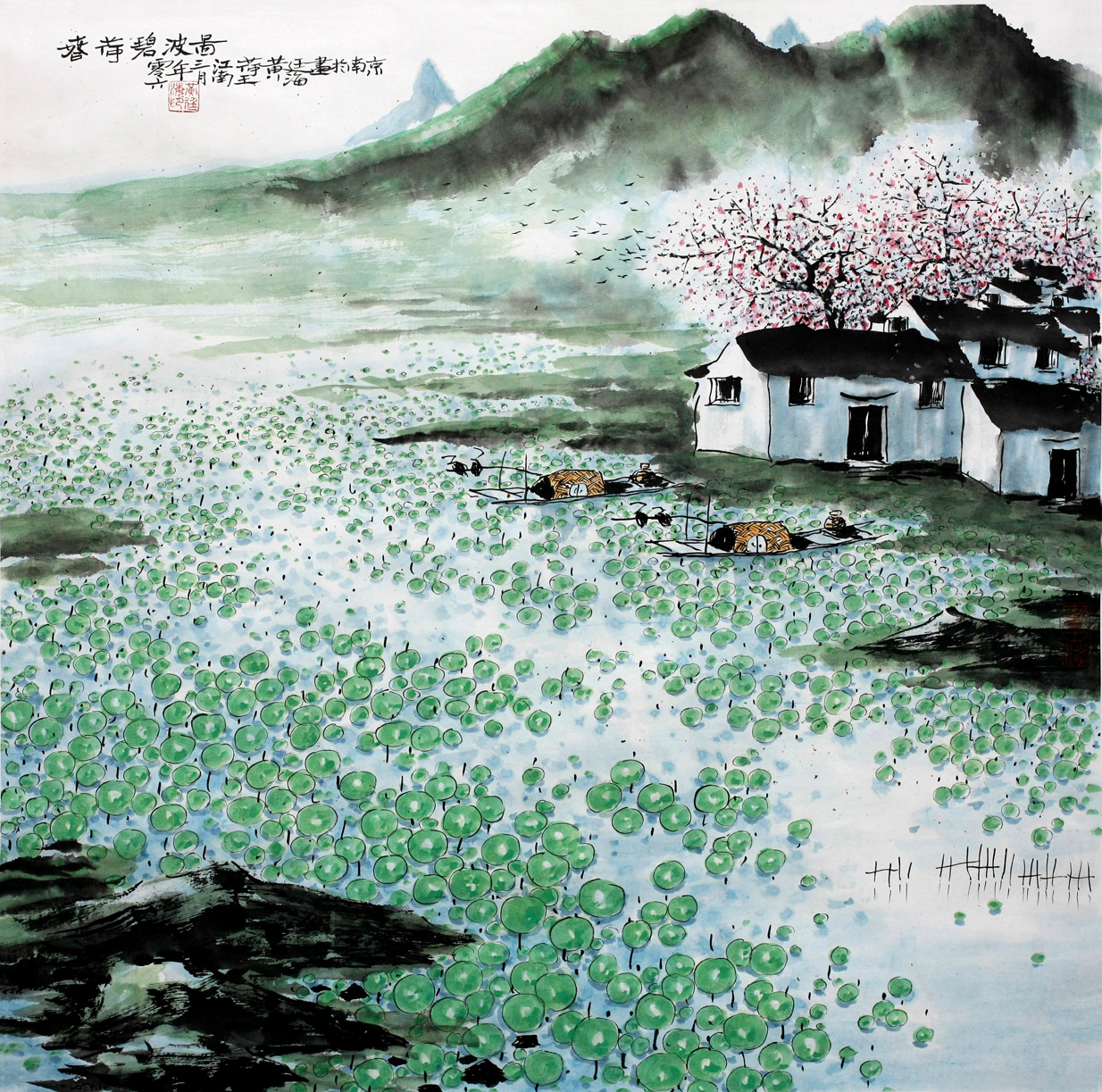
The basic language of ink painting is the use of ink
pens and the use of different inks to shape the artistic image, which will
create different artistic styles of the painter. Tinghai boldly re-annotated
traditional ink pens and created his own ink and ink symbols and artistic
context. When Guan Tinghai paints, he uses an unconventional method and always
draws out the mountain frame structure and the tree house pontoon bridge with
Jiaomo, such as a steel wire. It has a stable and unshakable sense of movement,
and then he wipes and stains it again. The light ink and light color layers are
thick, revealing the bounds of the peaks of the cliffs, the rivers and rivers,
the sunshine and the transpiration of clouds. He prefers to use large-area
trees and splashes of ink (green-based) and renderings to contrast the firmness
of the stone, the gorgeousness of the sun, and the ethereal cloudiness of the
clouds, resulting in very good visual effects. The flying waterfalls, the
raised sails, the bridge's village princes, the ducks playing in the water, and
the flying birds add vitality and boundless vitality to the magnificent and
rigorous picture! Tinghai's pen and ink creation is aimed at pursuing the
harmonious unity of masculinity and femininity, so that the unique Yamagata
water quality of the north and south schools, and the length of yin and yang,
are naturally integrated into his paintings. Observing its paintings, according
to the map, may be difficult to find in the world forever, but it also allows
people to enjoy their environment with peace of mind, that it is natural to
have this nature.
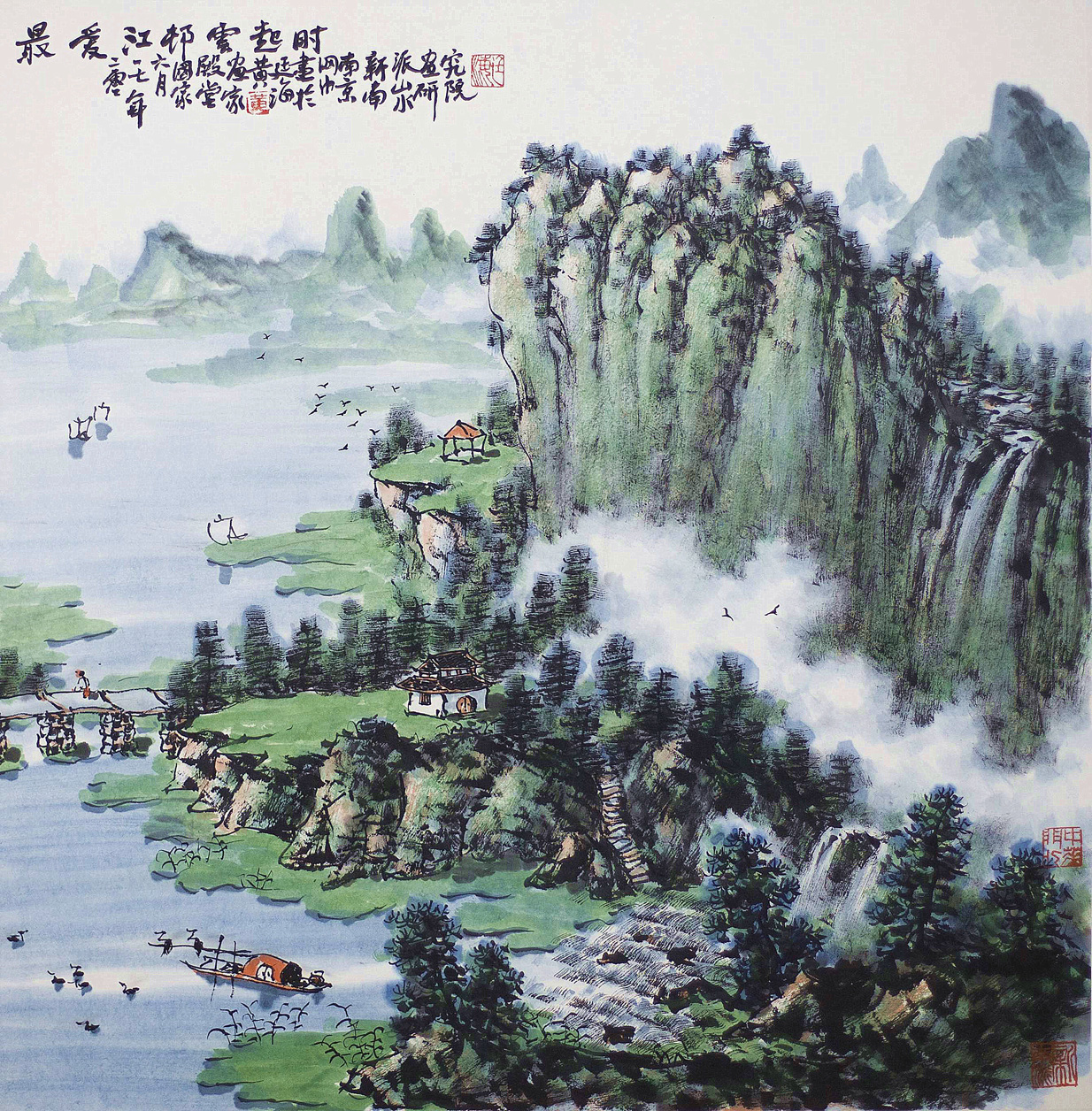
Since Western paintings entered China, Chinese and
Western law have been taught in fine arts education. Scholars can learn to be
good at it, and the maps they create tend to naturally blend into Chinese and
Western paintings. The landscape paintings of the Tinghai have broken through
the old habits of traditional landscape painting that do not pay attention to
light and shadow, and boldly incorporated light and shadow painting methods in
Western painting. His mountainous jungles, village pontoon bridges, and clouds
and rivers have many lights and shadows. The sense of space and
three-dimensionality is very intriguing. The strong light and shade contrasts
make the whole picture brilliant, fresh, bright and full of life. It gives a
glimpse of the motherland's mountains and rivers shining in the sunlight and
the splendid and bright weather. It is praised by the world as “sunshine
landscape” and become his new south. An important representation of the school
landscape painting.
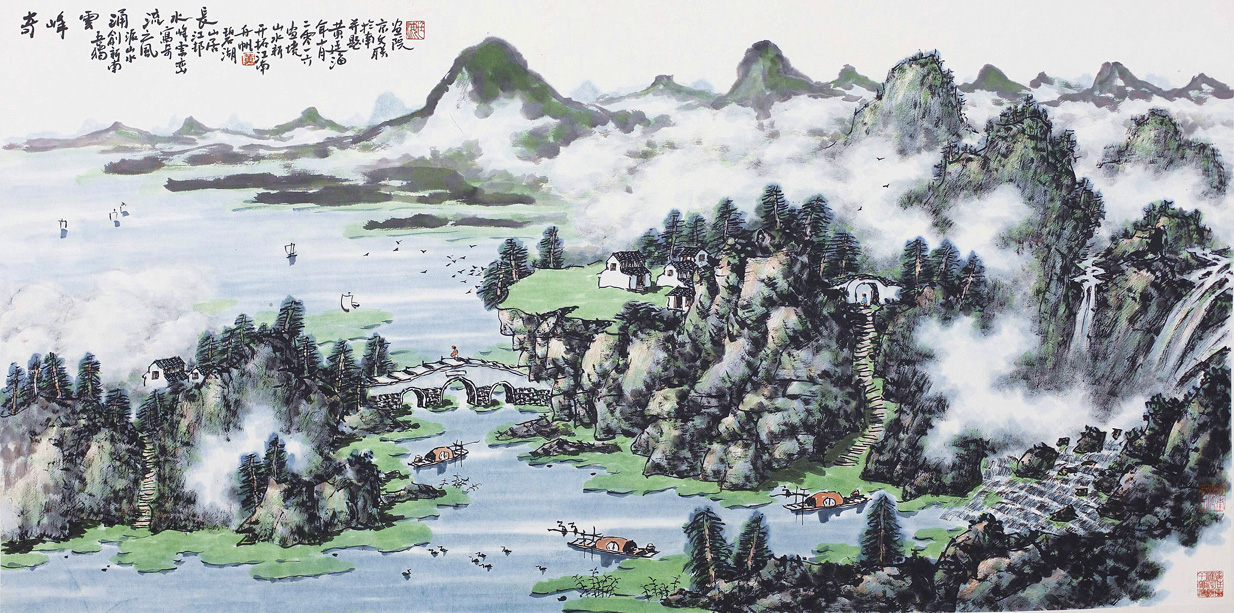
Painting is a kind of skill. Artists with high skills
are not necessarily highly skilled. Painters are not mere technologists.
Painters are thinkers first. In my opinion, the artistic image created by the
artist is only an ideological language and symbol. Its essential meaning is to
convey the painter’s thoughts, convey the painter’s social ideals and aesthetic
ideals, and reflect the painter’s social and natural And the concern of life,
creating and rendering a realm, inspiring people's thoughts, consoling people's
hearts and providing people with beautiful enjoyment. Tinghai has always been
paying attention to the study of painting theory. He told me that I met Fu
Shishi, a master of Chinese painting in Confucius Temple in Nanjing during his
youth, and he was very happy to see him drawing. He told him that “painting
should be creative” and “painting "We must pay equal attention to theory."
This remark made him stick to his life. In addition, he is not only drawing and
doing theoretical research, but also has rich writings. He is a scholar-type
painter. His theoretical literacy has made his paintings have a deeper cultural
connotation and form aesthetics. He is adept at dealing with various opposing
relationships in the painting, making the South and the North, Chinese painting
and western painting theory, Chinese and Western outstanding traditions and
modern consciousness, and artistic images. The relationship between
abstraction, figuration, realism, and decoration is harmonious and unified in
the painting; dotted lines and faces in the painting, yin and yang, rigidity
and softness, coarseness and fineness, ink and color, dryness and moisture, etc.
The factors are harmoniously unified in the image, so the landscape paintings
of the Tinghai have a high philosophical connotation, aesthetic height and
artistic value.
(My writer is a professor, tutor, famous art critic of
Nanjing Normal University)
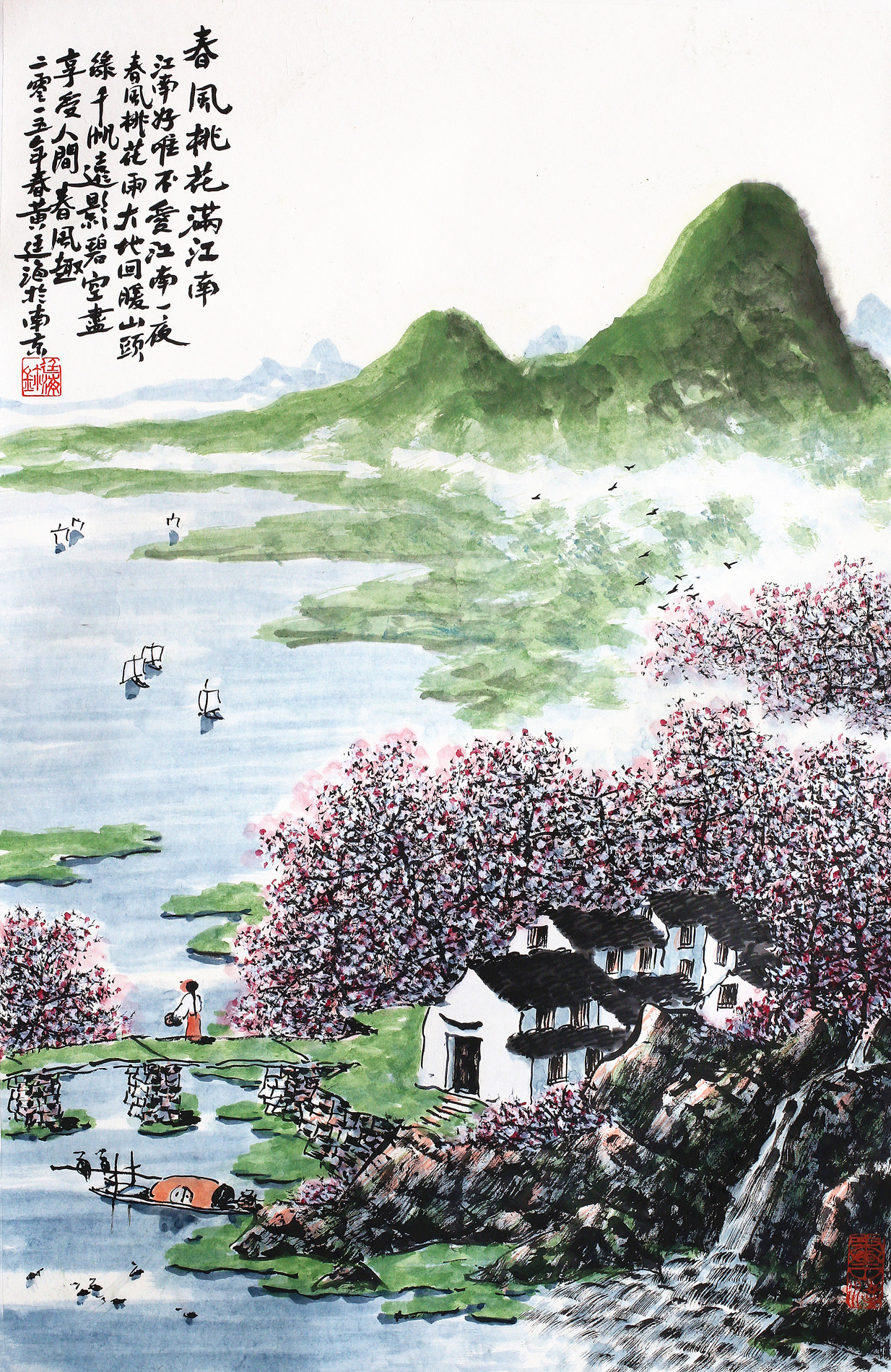
Huang Tinghai's
Art Introduction
Huang Tinghai, nickname LiuMozi, born in Nanjing in
1944, and ancestral to Baoying in Yangzhou. Famous contemporary scholars,
painters, art theorists. In the early years, he studied at Fuzhou University,
Zhejiang University of Fine Arts, Fu Baoshi, Yaming, Shao Luoyang, and Huang
Chunxi. Member of China Artists Association, National Grade One Artist, Nanjing
City Federation of Literary Artists. Researcher of the Chinese People's
Calligraphy and Painting Institute of the Ministry of Culture, Vice President
of the Chinese Academy of Ink Painting, Dean of the Xinnan School of Painting
and Calligraphy, Graduate Tutor of the Oxford Academy of Fine Arts, Tutor
Professor of Landscape Studies of the Hefei North American Academy, and the
National 5,678th Landscape Painting Exhibition Wait.
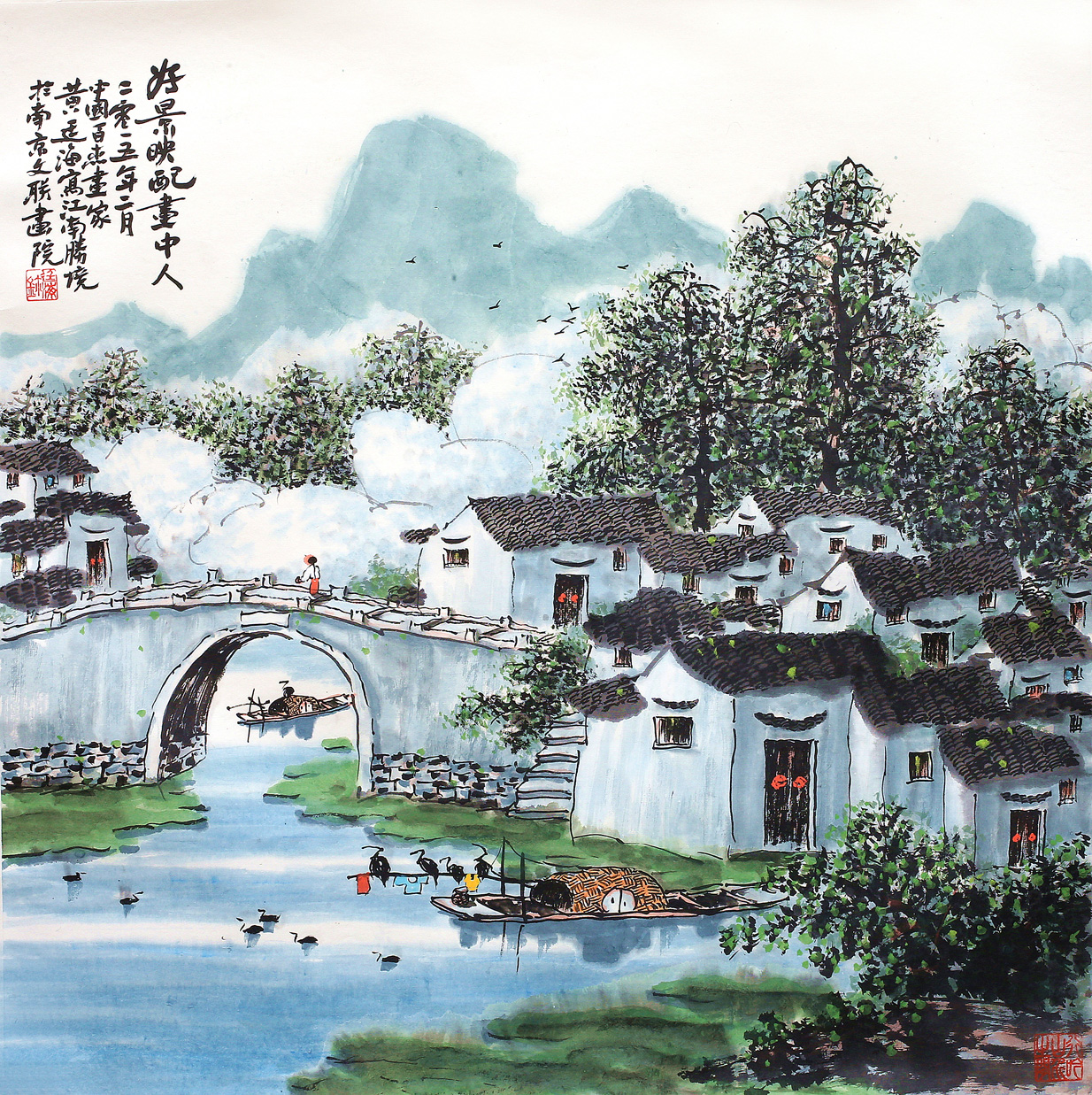
Known for good mountains and rivers and lotus flowers,
it has the reputation of Huangjia Shanshui and the king of the Jiangnan River.
It is the famous descendant of the Jinling School and the founder of the
contemporary Xinnan School landscape painting. It is one of the representatives
of contemporary Chinese landscape painting. He has successively won gold
awards, honorary gold awards, innovation awards, outstanding awards for the
National Landscape Painting Exhibition, Gold Medal for the Bangkok Chinese
Painting Exhibition, the Lotus King Award for the National Famous Flower Show,
and the Outstanding Achievement Award for the Eighth National Landscape
Painting Exhibition. In 1999, he was awarded the title of Chinese Top Artist by
the Chinese Literary Federation. In 2015, 40 work packages, “Mo Ying Jiangnan,”
were listed on Hunan Huaqiang Stock Exchange. In 2018, the group package was
listed on the Hong Kong New York Stock Exchange. Selected as a 2018 Chinese
artist, Hu Runbang. In 2017, Huang Tinghai Art Museum was established in
Nanjing.
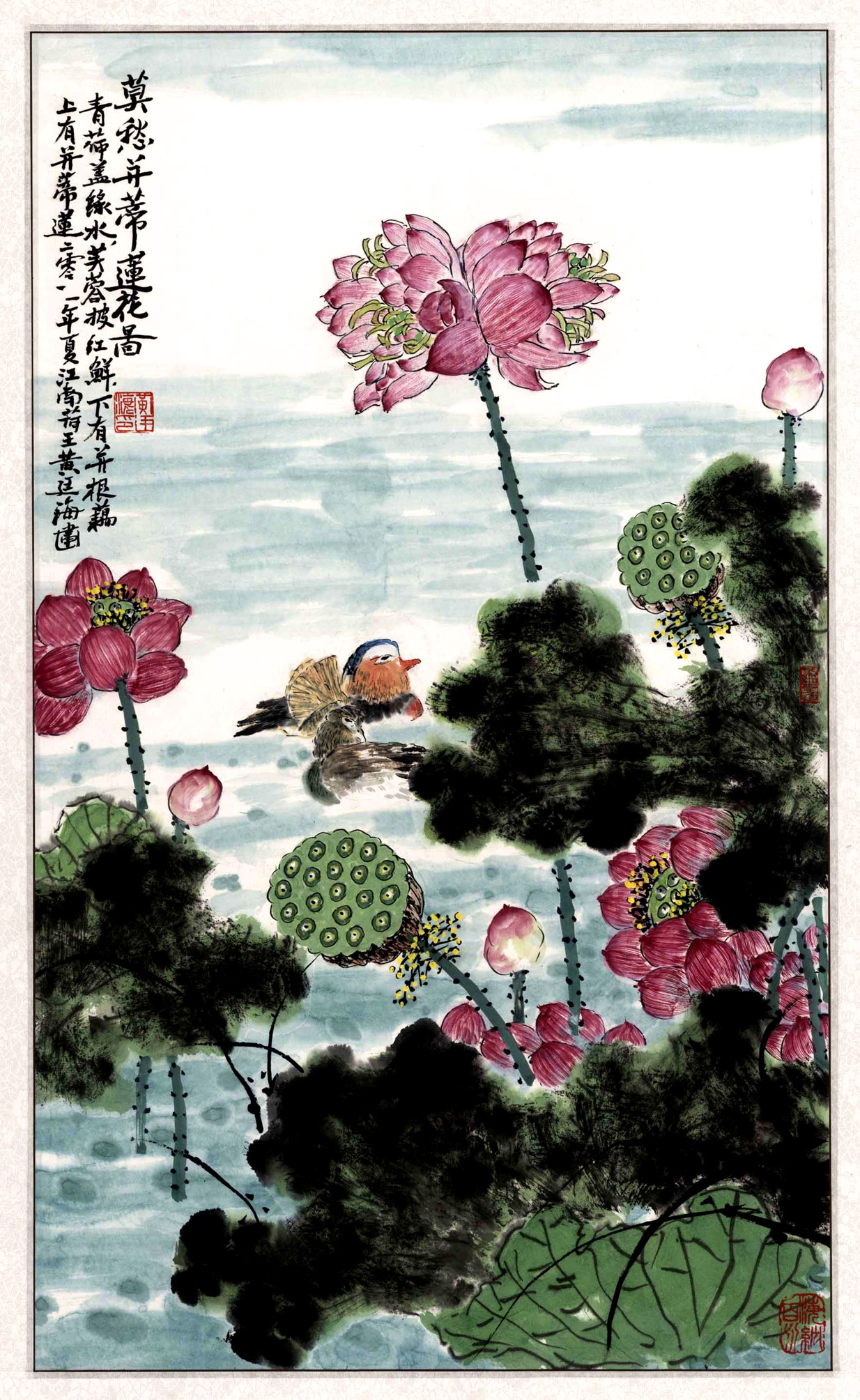
In the year of 2012, Huang Tinghai invited the Great
Hall of the People and Zhongnanhai in Beijing to create works such as the giant
landscape paintings of “Yangtze Rivers, Jiangshan”, “Yunchong Jiangcun” and
“Living in Jiangnan Painting”. Xinhua.com commented: This is another
masterpiece of the contemporary landscape artist's dedication to the Great Hall
of the People following Fu Baoshi's "So Much Beauty." Academic works
include "An Analysis of the Famous Ancient Landscape Paintings,"
"Southern Landscape Painting School," "Collection of Huang
Tinghai's Paintings," and "The Study of Huang Tinghai's Xinnan School
Landscape Painting." The published books include more than 20 collections
of Contemporary Chinese Painting Artists - Huang Tinghai's Xinnan School
Landscape Paintings, Masterpieces of the Works - Collection of Huang Tinghai's
Works, National Teaching Models of Higher Art Colleges, and Huang Tinghai's
Chinese Painting Collection.
(以上图文资料由双子座提供)
作品收藏热线:何先生15801030100
